Showing posts with label psychiatry. Show all posts
Showing posts with label psychiatry. Show all posts
Thursday, August 7, 2008
Psychiatry and Psychotherapy
The recent article and buzz about the decreasing use of psychotherapy by psychiatrists (http://www.healthexperiment.com) is further evidence of a social shift away from relating to others as people. Our use of torture as a nation, the "axis of evil" language from our government, and the increasing psychiatric view of symptoms as reflections of neurons and chemicals suggests that we may be in a social withdrawal from being able to face and bear the pain of human experience. The Austen Riggs Center' s Eric Plakun speaks for the tension in psychiatry between two models of treatment: biological and psychological(http://wkim83.wordpress.com ) . He argues that they must be integrated for a full picture of our patients. Shifting away from the area that psychoanalysis has so carefully developed of listening to others with disciplined empathy runs the risk of losing the embedded set of values about the significance of the individual life.


Saturday, December 29, 2007
FIRST POST
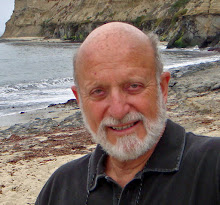
Why would a 60-ish psychoanalyst, who doesn't really understand this medium, start a blog? And who would be interested? And, why Lost in Familiar Places? This, in addition to being the title of a book I wrote a while ago with Wesley Carr, the former Dean of Westminster Abbey, is a statement about where many find themselves in the world. In addition to referring to many of our patients, the phrase evokes a series of questions that I'd like to muse about in this format from time to time. And, I hope others will join me.
This is not an official blog from the Austen Riggs Center. It is my own -- speaking as an individual with a particular set of experiences. Riggs has no part in this. But my patients and their familes have, over the years, been my teachers. And, in addition to my ongoing interest in their treatment, I am particularly focused on what I have learned and am learning from them that applies to what we all struggle with in the larger world.
What happens to us that we get lost in the familiar? What does it take to create something new that is not simply shaped by the past but connects to the creative learning of others? What kinds of other people do we need to engage in order to go beyond fruitless repetition -- and in what kinds of settings, with what tasks? I have had the extraordinary opportunity to bring my learning into other settings: schools, organizations, health care settings, politics and international relations. All of these will be the subjects of this blog -- if I can find the time to do it -- and can find a way to engage those of you with linking ideas.
At the Austen Riggs Center, where I am the medical director, we work with so called "treatment-resistant" patients, their families and the therapeutic community that they structure with our help. Our patients, unable to be helped in other settings where biology and behavioral controls predominate, come to our open setting to be as much in charge of their lives as possible. And they teach us -- in their intensive psychotherapy, family and group treatment and community meetings -- about the ways past traumatic experience may be so all-consuming that it dominates their orientation to the world. They show us the kinds of help people may need to find their own voices. They demonstrate how particular kinds of organizational structures can support individual and group creativity. They teach us about the ways that so-called "personality disorder" may be a way of speaking to the world about history. And we take our learning and go out into the world, where we find similar communities with similar needs and questions. Schools, health care settings, organizations, local communities, governments -- all filled with people who can't find ways to use the best of themselves. Oppressed by feelings about others, they have trouble finding and using themselves. And we learn from them.
The first question seems to be: how can listening to psychiatrically ill patients help in learning anything about other social problems? There may be others of you interested in what flows from this question. I'd like very much to hear from you.
Ed Shapiro
Subscribe to:
Posts (Atom)